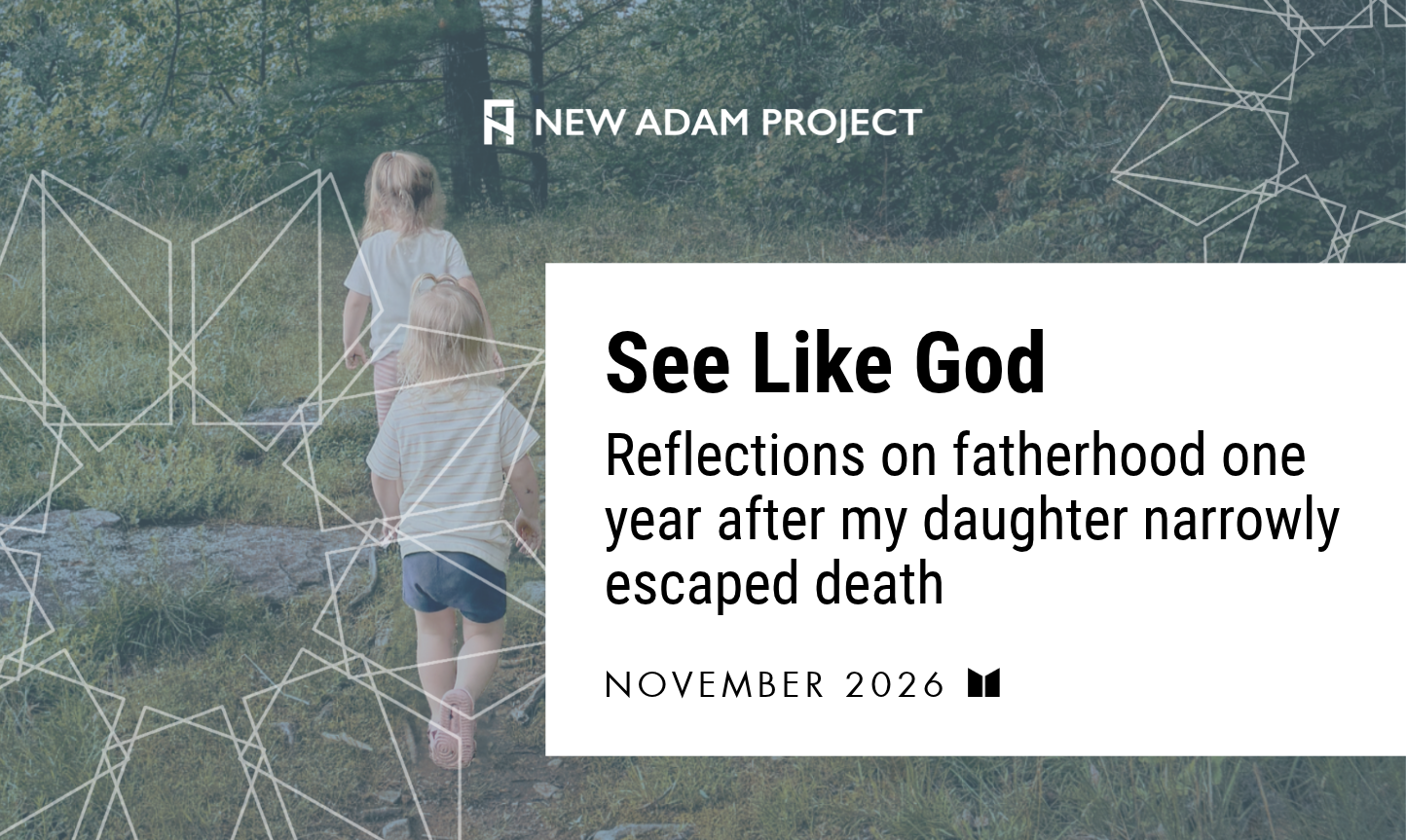
A year ago, my middle daughter Aletheia drowned in the creek behind our house. She barely survived, and it changed me as a father.
It was a cool November afternoon and my wife was away, enjoying some long-overdue time to herself. My dad, brother, and I were playing with my three girls on the faded-green grass of our backyard.
I was holding my six-month-old and pushing my oldest on a swing when several wasps caught my attention as they hovered closer to our vicinity. Being the mature adults that we are, we stopped to wage war on the bugs, swatting and throwing walnut shells—so as to keep the kids from getting stung.
The irony.
Satisfied with our work, I instinctively turned to count heads. 1, 2, …
“Where’s Aletheia,” I said.
She was nowhere to be seen or heard.
Amid the wasp debacle, my dad had set her down. Not a minute later, she had vanished.
My heart began to pound. I ran around the house to see if she had run off, petitioning God as I went. At the edge of the lawn, just a few yards from where we were playing, a thick wall of brush conceals a creek flowing heavily two-three feet below. My dad and brother began interrogating the openings in the brush for any sign of her.
Within seconds, a yellow boot at the water’s edge caught my dad’s attention. Assuming the creek had carried her on, he ran downstream and jumped from the steep, muddy bank into the water. Not far from the boot, he found his granddaughter floating face-down.
She was just under two years old.
From up near the house, I heard him yelling my name. I raced toward the creek and saw my dad climbing up the bank through an opening in the brush, holding Aletheia’s limp body in his arms.
When I say my heart dropped, as cliché as it sounds, it felt like a dumbbell hit the floor of my chest.
“Is she alive!!??” I yelled.
“I don’t know. Call 911.” he quickly replied, laying her down for chest-compressions.
Struggling to use my limbs, I handed the baby to my brother and fumbled for my phone.
She lay sopping on the grass, blue and lifeless, with leaves and muck disguising her golden hair.
We had heard nothing! No cracking of sticks. No splash. No scream. Mouth-to-mouth wasn’t working. I was certain she was dead.
The passing moments of no response felt like an eternity of torment.
I was still on with dispatch, and my dad was still giving breaths when she began showing signs of life. Creek water and mucus bubbled out of her mouth and nose as she mustered a continuous moan.
Finally, her eyes shot open—brilliantly blue against the sickly, white skin.
By the time paramedics arrived, the moan had grown into a sharp toddler cry, which is a very good sound, they assured us. But we knew we weren’t out of the woods. We continued to pray as we sped to the hospital.
Doctors concluded that she experienced cardiac arrest and was near hypothermic. It was a “non-fatal drowning.”
I could go on.
By God’s grace, she recovered quickly in the hospital. Today, she scurries about with the same fearlessness, as though nothing had happened.1
That incident changed me. Even the momentary dread of having to bury my child is hard to forget. It feels like dodging a bullet.
But as I ponder the will of God and his purposes for this, I’m convinced it’s not like that at all. God gives life and God takes life. And he did not take her life that day. The incident was not a meaningless dodge. Nor was it a lucky sequence of coincidences.
God spared my daughter’s life for a purpose, and part of that purpose is to change me.
I don’t feel guilt over the incident. Aletheia is fearlessly drawn to danger. But in a different sense, God has shown me that I do not see my children as I ought to.
I know that’s vague. Here’s what I mean.
Seeing and SEEING
I was recently making my way through the book of Exodus when I came upon the final two verses of chapter 2. These two verses caught me off guard because of the four verbs that tie them together—especially the third one.
In verse 23, the cries of Israel in bondage made their way to heaven. Then it says,
God heard their groaning…God remembered his covenant…God saw the children of Israel…and God knew.
The whole chain is a remarkable revelation of the attentiveness and compassion of God, but it was the third action that really gripped me. It says “vayyar’ ’elohim et-bene yisra’el” — “and God saw the children of Israel.”
Seems pretty straightforward, but there’s more than meets the eye, pun intended.
The root of the verb vayyar’ is ra’ah, which often refers to literal seeing, but not always. There are several times in the Old Testament when ra’ah goes far beyond simple seeing to communicate close examination, active acknowledgment, special giving of attention, and even provision.
Exodus 2:25 is one of these instances where seeing is more than seeing.
It’s the same logic behind the classic critique “Sure, you see me. But do you really see me?” Another example is found in Genesis 29:31-32, when God was attentive to Leah in her barren distress.
The woman finally conceived and bore a son, naming him Reuben, “because” she said, “Yahweh looked upon [ra’ah] my affliction.”
See what I mean? It wasn’t merely that God saw her trouble. It was that he acknowledged her trouble with the intention of showing her compassion. Another good translation might be “…Yahweh acknowledged my affliction.”
Genesis 16:13 and 22:4-14 are also great examples.2
This is who God is. But what about me?
Having Cake and Eating It Too
My children sometimes frustrate me. I often find it hard to see them in their many afflictions, but almost losing my daughter reframes the whole thing. If God had taken her that afternoon, I would be looking back, wishing to answer every request and give sympathy in every affliction—to feel the tug that comes from her absence and have the opportunity that’s only possible with her presence.
This is the gift of a close encounter with death. I don’t have to wish. It’s a unique opportunity to have your cake and eat it too.
A year has passed since that event, and a passage like Exodus 2:24-25 reminds me that I am called to imitate God in being a father who sees.
Do I see my children? Do I give special attention to their excitement and acknowledge their cries for help regardless of how “dramatic” I think they’re being?
This isn’t an argument for coddling them or letting their emotions dominate the situation. That’s never how God responded to Israel.
It’s a simple reminder that being like God as a father involves hearing my children, remembering the unique responsibility I have to them, and being attentive to their challenges and triumphs.
God is not content to leave us as we are. His will for our lives—more than which career we pursue or whether to rent or to buy—is to make us like him.
Yahweh, Yahweh, a merciful and gracious God, slow to anger and abounding in loyal love and faithfulness…3
If God has given you kids and has not taken them away—
be the kind of father or grandfather you would long to be if they were no longer in your life.
Hear. Remember. See. Know.
Be like God.
Endnotes
- In the wake of the event, I wrote a poem for Aletheia’s second birthday. I don’t consider myself a poet, but I got inspired by the author Dr. Malcolm Guite. You can find the poem in my Substack “Notes.” ↩︎
- Genesis 16:13 is notoriously difficult to translate into English. However, there is a clear play on the word ra’ah, “to see.” Hagar cannot believe that she has seen (ra’ah) God, the one who has been seeing (ra’ah) her. But clearly, God has done more than see her. He has acknowledged her trouble and provided her with a future.
In Genesis 22:4-14, Abraham tells his inquisitive son Isaac that God will see (ra’ah) for himself the lamb for the burnt offering. After God provided an animal in Isaac’s place, Abraham named the place “Yahweh will see [ra’ah].” Again, the idea is not that God will catch a glimpse of the offering, but that he will take care of it himself. ↩︎ - This is my translation. Compare ESV here. ↩︎
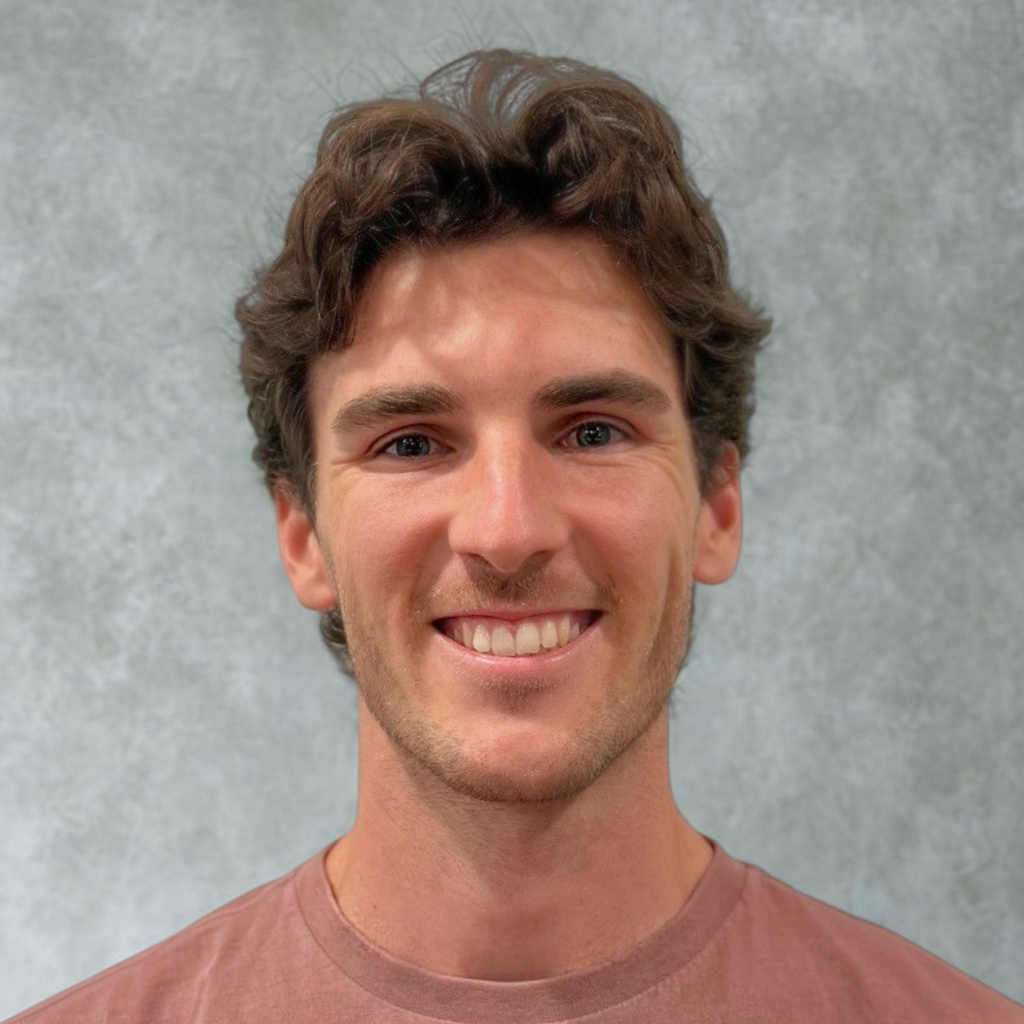
Dylan Brock has been with Man in the Mirror since January of 2022, when he began managing the Resources department and providing customer care. For several years, he served in MIM’s Spiritual Fathers department, assisting the development and distribution of resources for mentors and young men. He now works on the editorial team, researching, writing, and helping to implement digital strategy.
Dylan holds a BA in Theology from Reformation Bible College (2021) and an MA in Old Testament Biblical Studies from Talbot School of Theology (2026). Raised in Southern California, he now lives in Middle Tennessee with his wife and four kids and is an active member of a local church.